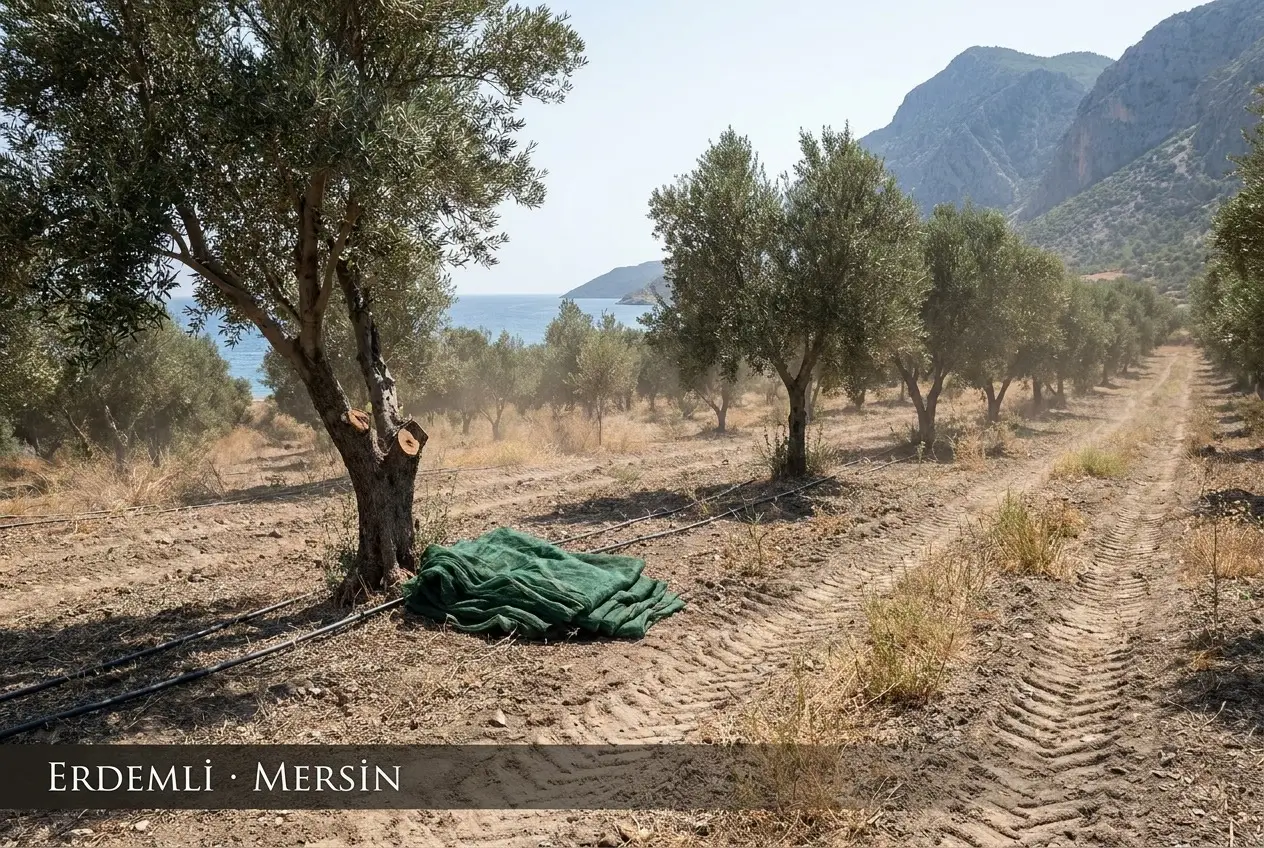
Erdemli — Where the Research Happens
Erdemli hosts the Alata Horticultural Research Institute. From this coastal district, where Sarıulak is widespread, we source both oil and table fruit.
One thing sets Erdemli apart from other olive districts across the Mediterranean basin: olives are not only grown here, they are studied here. The district hosts the Alata Horticultural Research Institute, an institution whose presence subtly alters the character of regional agriculture. Where most farming communities rely exclusively on generational habit, growers in Erdemli operate in the immediate orbit of systematic agronomic research. This scientific presence provides a distinct foundation for both table fruit and the production of regional olive oil, commonly sought after under the broader umbrella of Mersin zeytinyağı and distinct Erdemli zeytinyağı lots.
Why a research institute matters
Having an agricultural research body in a region shapes local growing practice directly. Variety trials, nursery production, rootstock evaluations, precise pruning protocols, balanced fertilisation guidance, and disciplined disease monitoring reach nearby groves far more rapidly than through standard agricultural extension channels. Over time, that translates into better-informed canopy management and more uniform raw material.
As buyers and handlers, we see the practical result during the harvest months: in regions with immediate access to technical support, consistency between individual grower lots runs higher. Fruit arrives with fewer mechanical abrasions and more balanced maturity indices across deliveries.
Processing infrastructure in the district is adapting to this raw material supply. According to the table published by the Erdemli district governorship, the number of olive oil factories rose from 5 between 2019 and 2021 to 8 in 2022. This addition of local crushing capacity has a measurable physical impact on oil chemistry. Olives begin to degrade the moment they are severed from the branch; cellular respiration continues, and enzymatic breakdown accelerates if fruit sits in storage crates. More local processing units mean transport distances shrink and fruit reaches the continuous cold press (soğuk sıkım) line within hours of picking. The direct consequence of shorter dwell times is lower serbest asitlik (free acidity) and fewer oxidative defects in the freshly pressed oil.
Sarıulak country
Erdemli is one of the primary coastal districts where Sarıulak is widespread. The cultivar is inherently dual-purpose, serving both table preparation and mechanical extraction. It features an oil content around 18–19% and medium-large fruit with a balanced flesh-to-stone ratio. In neighbouring Tarsus, the same variety is the subject of two separate designations of origin, reflecting its deep cultural and culinary foothold in the eastern Mediterranean.
When harvested as an early harvest (erken hasat) crop while still green to straw-yellow, Sarıulak yields a distinctive natürel sızma zeytinyağı (extra virgin olive oil) characterized by fresh herbaceous aromas, mild bitterness, and a clean, peppery finish on the back of the palate. Allowed to ripen further into late autumn, the fruit shifts into black table olive preparations, particularly suited as salamuralık zeytin (brined olives) and sofralık zeytin (table olives) due to its firm structural texture.
What being coastal changes
Erdemli sits directly on the Mediterranean shore, rising gradually from sea level toward the lower slopes of the Taurus Mountains. This proximity to a vast body of water generates a mild marine climate that virtually eliminates the threat of hard winter frost. For the olive tree, frost protection is vital, as sub-zero cold snaps can destroy fragile fruiting shoots, damage bark, and ruin an entire vegetative cycle.
However, coastal geography presents clear trade-offs that require honest agronomic management. The high relative humidity characteristic of the shoreline elevates fungal risks, such as olive leaf spot, and extends the active window for the olive fruit fly. Grove management in Erdemli therefore demands rigorous pruning to ensure constant airflow through the center of the tree canopy. When growers fail to open their tree crowns to the sea breeze, humidity collects, fruit health declines, and the resulting oil risks defects such as fustiness or mustiness. When managed properly, the maritime conditions yield healthy, early-maturing fruit with high moisture content, suitable for both table processing and fresh milling.
What we source here
Our work in Erdemli covers both table olives for brining (salamuralık sofralık zeytin) and fruit destined for oil extraction. On the oil side, every incoming batch is categorized by precise chemical and physical analysis: natürel sızma zeytinyağı (extra virgin olive oil), natürel birinci zeytinyağı (virgin olive oil), rafine zeytinyağı (refined olive oil), and blended riviera zeytinyağı.
Every lot we purchase undergoes free acidity testing in our own dedicated laboratory facility in Düziçi. We perform these measurements strictly for accurate internal classification, blending control, and quality verification; they serve an informative operational purpose and do not substitute for formal accredited certification. For local Erdemli farmers and orchard owners, our sourcing process is built on transparent terms: we conduct free sample analysis, provide an on-site commercial offer based on analytical yields, and handle weighing and payment directly at the procurement point.
Scale is not an obstacle for our supply network. We provide perakende zeytinyağı (retail packaging) for household consumption (evsel tüketim) alongside high-capacity toptan zeytinyağı (wholesale supplies) for commercial clients, catering firms, and otel ve restoran (HORECA) kitchens. Packaging options range from 1-litre glass bottles for table service to 5-litre tins, 16 kg tins for food service facilities, and bulk container shipments up to 25 tonnes for bottling plants and industrial manufacturers.
You can complete your requirements via our online sipariş system. Leave an order request to receive a direct price quotation based on current market rates. We accept payments via bank transfer (havale/EFT) or credit card, issue detailed corporate or individual invoices, and organize freight and kargo delivery across all 81 provinces of Turkey. Local agricultural producers seeking to market their crop can review our intake terms on our buying page.