Antakya — Where the Most Trees Stand
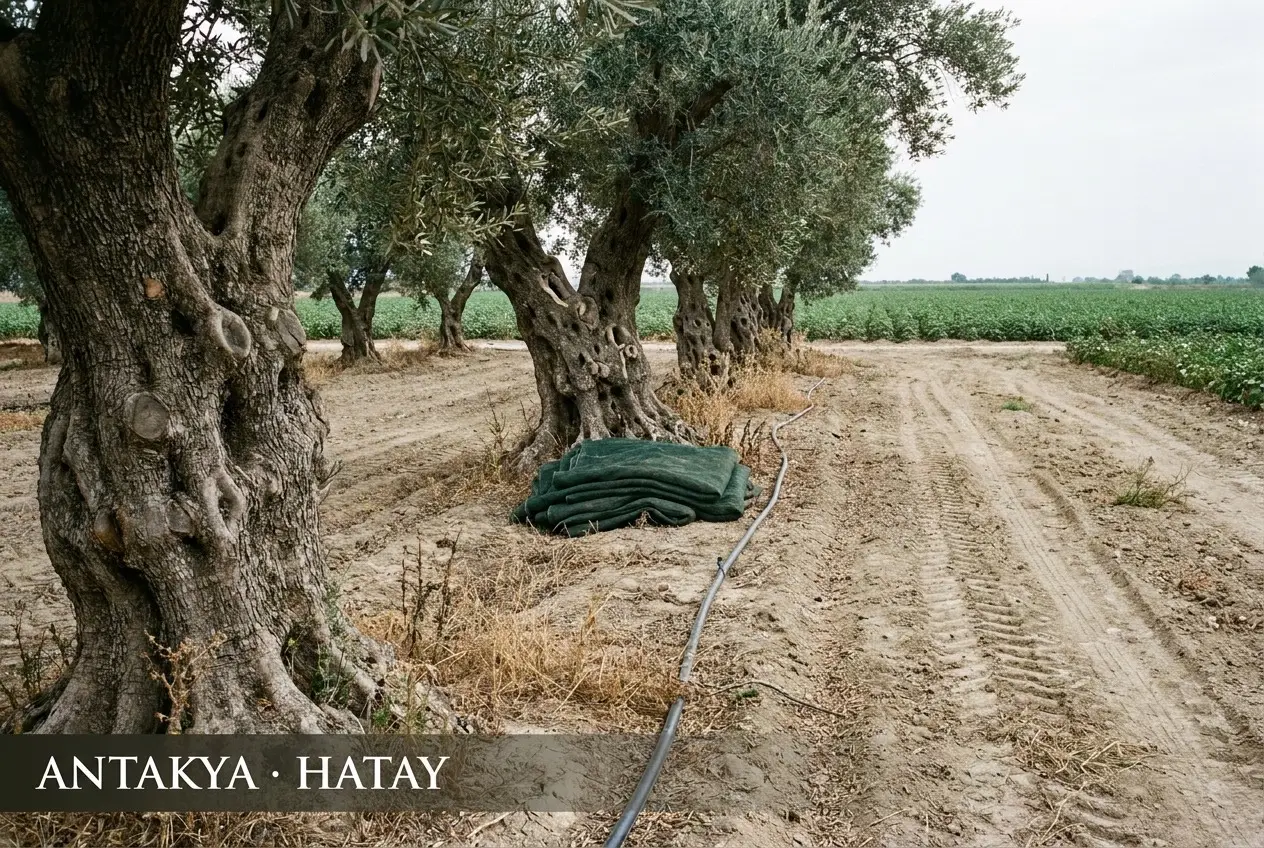
Antakya holds more olive trees than any other district in Hatay and is the name most associated with the Halhalı variety. We buy every grade from these groves on the edge of the Amik plain.
With more than 1.66 million olive trees, Antakya holds more trees than any other district in Hatay. Its olive area covers 5,549 hectares and yields 14,908 tonnes a year. Situated at the crossroads of ancient trade routes and backed by rugged foothills, this landscape combines fertile river soil with steep terrain where mechanised agriculture gives way to careful manual labor. Olive cultivation here is not an isolated monoculture; it coexists with field crops and urban settlements, shaping an agrarian mosaic that defines Hatay zeytinyağı production.
When assessing Antakya zeytinyağı, understanding tree density versus actual oil output is essential. While the sheer volume of trees reflects centuries of continuous arboriculture, the distribution across the district ranges from hillside plots catching Mediterranean breezes to groves situated right on the margins of the alluvial basin. These geographical variations directly influence fruit maturation, oil accumulation within the drupe, and the sensory profile of the resulting pressings.
The home of Halhalı
Among Hatay's registered local varieties, Halhalı is the one most often named alongside Antakya in the literature. It serves both table and oil use and carries the region's distinctive character. Saurani and Sarı Haşebi are more closely associated with the Altınözü area — covered on our Altınözü page. Halhalı olives are relatively small, firm-fleshed, and highly valued when harvested early as green sofralık zeytin. Prepared as crushed or brine-cured salamuralık zeytin, the variety retains a crisp bite and a mild, pleasant bitterness that reflects its high polyphenol retention.
When pressed for oil, Halhalı requires disciplined handling. In an erken hasat (early harvest) program, picking begins while the fruit is turning from green to straw-yellow. At this stage, pressing must be carried out promptly under cold press (soğuk sıkım) conditions, keeping extraction temperatures below 27°C. Limiting thermal exposure prevents the loss of volatile aromatic compounds—notes of fresh cut grass, green almond, and wild herbs—while keeping enzymatic oxidation low. The resulting natürel sızma zeytinyağı displays balanced pungency and low serbest asitlik (free fatty acidity), making it sought after for both high-end culinary use and health-conscious evsel tüketim (household consumption).
Reading the numbers honestly
Antakya leads on tree count, but its yield per hectare sits below the provincial average, and production has fallen from its 2016 level. There is no single explanation: cotton and wheat dominate the district's farming identity on the Amik plain, groves often sit at the plain's edge, and standards of care vary. Unlike dedicated olive monocultures where drip irrigation and intensive pruning are uniform, many Antakya parcels are maintained alongside seasonal field crops, leading to fluctuating yields from one harvest season to the next.
We write this rather than hide it, because what we assess when buying is not a district average but the batch in front of us. Antakya has very well-kept groves and neglected ones alike. The difference shows up in the sample analysis. Free acidity is the primary indicator of olive fruit integrity prior to milling. If harvested olives sit in warm sacks for days before pressing, cellular breakdown releases lipolytic enzymes that increase free fatty acids, turning what could have been an extra virgin grade into natürel birinci zeytinyağı or necessitating refining into rafine zeytinyağı. Conversely, fruit picked by hand and milled within hours yields oil with exceptionally clean chemical parameters.
Every sample we collect from local growers is evaluated at our dedicated in-house laboratory in Düziçi. Our serbest asitlik and peroxide measurements are conducted to categorize each lot accurately and determine appropriate pricing. We share these results transparently with growers; while our tests are strictly for informational guidance and do not replace accredited official laboratory reports, they provide an immediate, objective basis for on-site offers, accurate weighbridge scaling, and prompt payment directly at the farm gate.
The 2023 earthquakes
The earthquakes of 6 February 2023 hit this region hard, and the damage reached the groves: in Defne a grove was split in two by ground fissures and shifted roughly a hundred metres. The roughly 300-year-old olive oil mill in Altınözü — today an olive museum — was badly damaged, then restored and reopened. Agricultural infrastructure across the district suffered, from cracked storage reservoirs to damaged road access connecting remote hillside groves to regional pressing facilities.
We continue to buy here. A grower being able to sell their crop at its worth is a small but real part of this area's recovery. Sourcing directly from family groves in Antakya ensures that local agricultural traditions remain viable, keeping historic trees productive rather than abandoned in the aftermath of disaster.
What we source here
From Antakya we buy across every grade — extra virgin, virgin, refined and olive oil (riviera) — as well as table olives for brining. In 1 L and 5 L for retail, 16 kg tins and bulk up to 25 tonnes for wholesale. Each commercial grade serves distinct culinary and operational requirements:
- Natürel Sızma Zeytinyağı: Cold-pressed, low-acidity extra virgin oil, ideal for raw consumption, cold appetizers, dressings, and gourmet dining rooms.
- Natürel Birinci Zeytinyağı: Virgin olive oil with a softer profile, perfectly suited for warm regional dishes, bakeries, and general food service operations.
- Riviera Zeytinyağı & Rafine Zeytinyağı: Stable culinary oils balanced for high-heat cooking, industrial frying, and commercial food manufacturing where a neutral sensory profile and high thermal stability are required.
- Salamuralık Sofralık Zeytin: Naturally cured table olives prepared according to traditional brine methods, packed for both retail grocers and institutional catering.
We supply diverse customer channels, ranging from perakende zeytinyağı buyers purchasing individual bottles for home kitchens to toptan zeytinyağı accounts including otel ve restoran enterprises (HORECA), commercial supermarket chains, food manufacturers, and export partners. All packaged goods are stored in climate-controlled environments away from light, heat, and oxygen to protect polyphenols and preserve shelf life.
To place an online sipariş or request current commercial terms, fill in the form; pricing and payment options (bank transfer, EFT, or credit card) are given by phone. We provide formal corporate or individual invoicing with every order, and coordinate reliable kargo freight across all 81 provinces of Turkey, whether dispatching a single parcel or multi-tonne bulk tanker shipments.